insights-en
insights-en
insights-en
insights-en
The beta opens today. Here is a first look at the key features, how to join, and how to secure lifetime free PRO access.
insights-en
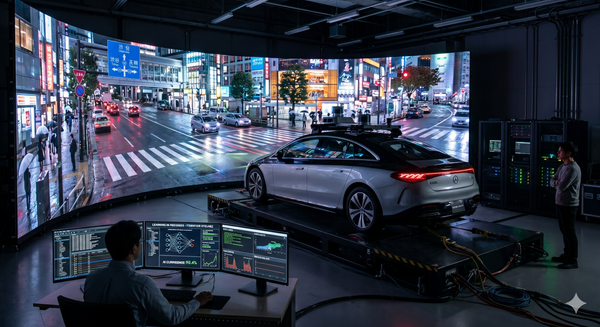
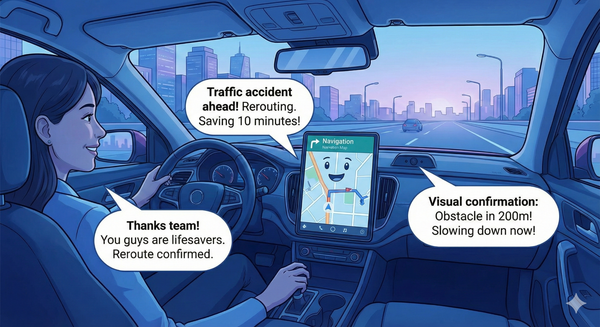
“There’s a double-parked vehicle in my lane. I’m going around it.” “Hey, Mercedes. Can we speed up?” “Sure, I’ll speed up.” This is an actual dialogue between a driver and the Mercedes-Benz autonomous driving AI, showcased during the NVIDIA GTC keynote in March 2026. This
insights-en
During CES 2026, A Piece of Map will release daily updates on the latest news from the mapping, mobility, and spatial information industries. For a summary of the most important stories, please visit our LinkedIn page. Last Update: Jan 12, 2026 (PM) Seoul Time 🗺️ Maps 01. Dynamic Map Platform North
insights-en
A Comparison of AI Agent Strategies Among the Top 3 Global Map Companies Historically, the application of AI in the mapping industry was confined to the backend: how to produce maps faster, more accurately, and more efficiently. With the rise of end-to-end AI in autonomous driving—some of
insights-en
The integration of map data and geospatial solution is foundational to location-based services. However, the increasing complexity of licensing models, map features, and API functions has created significant operational and financial inefficiencies for many businesses. This report identifies four core challenges faced by companies utilizing map services and outlines
insights-en
Introduction Recently, the emergence of autonomous driving technologies that rely entirely on end-to-end AI learning has reignited the fundamental question whether High Definition Maps (HD Maps) are really necessary. The mapping industry is adapting to a sustained trend where commercial passenger vehicles are taking longer than anticipated to
insights-en
Introduction: The Critical Role of Maps in Business In today’s digital landscape, maps are no longer just static tools for navigation. They are a fundamental and dynamic component of any location-based service, serving as the central nervous system for products in industries like ride-sharing, logistics, food delivery,
insights-en
Traditional data sources for city and regional analysis, including urban planning, real estate, and retail, have historically focused on static representations of urban life. This includes data such as: * Census data: Population and demographic information for residents in a specific area. * Vehicle registration: The number of registered vehicles within a